Streamlining POS workflows
SUMMARY
Revisualized a more modular Toast POS system that promotes personalization amongst diverse internal setsups within Food and Beverage (FnB) companies. Worked closely with various FnB companies (Mix + Matcha, Friends of Friends, Camellia Rd, Gleem Energy) through qualitative interviews to gather real friction and intuitive points in their day-to-day workflows
PROBLEM STATEMENT
San Diego food service business owners struggle with frequent workflow disruptions on Toast POS, forcing them to revert to time-consuming manual methods. These interruptions create anxiety about potential revenue loss and lead to employee frustration.
ROLE(S)
Design
CONTEXT
Personal Project
TIMELINE
Jan 25' - March 25'
PLATFORMS
Mobile, Tablet. Prototype
TEAM
Alexandra Citra, Ryan Eang, Ashley Nguyen, Zander Vilaysane
PROCESS
( 1 ) User Research
To understand in-depth experiences of existing workflows, we interviewed with Camellia Rd, Mix + Matcha, and Friends of Friends management staff with focused questions around scenario-based interactions with their POS systems.
To understand how some FnB companies manage technical and customer experience troubleshooting, we interviewed with Gleem Energy to ask focused questions regarding their approach to client interactions and distribution.
Drafted a feature comparison chart amongst Toast competitors: Square, Clover, Shopify (See visual artifacts section).
( 2 ) Insights
Mix + Matcha had frequent conflicts with ID tracking on orders and queues, slowing down service process especially during peak rush segments.
Camellia Rd needs more reliability on systems in scenarios where offline functionality is required.
Compared to competitors, Toast lacked in customizable layouts, third-party app integration, and customer feedback collection.
( 3 ) Solution
Incorporate receipt components that provide enough and necessary detail in most viewable and high-traffic interface areas.
Having mobile format accept payment transactions through tap-to-pay or Apple Pay when in-store network is down (fallbacks to mobile data coverage).
Incorporated a tab system in the tablet format to improve custom layouts necessary for specific service functions.
( 4 ) Testing & Iteration
User testing with stakeholders both validated our integration of a tab system, as they found it beneficial for their team to quickly access information/updates that can be relayed to customers actively during service.
Camellia Rd provided feedback that a gallery scope of the receipts would be helpful rather than just individual, making it easier to parse and compare necessary information.
Mix + Matcha suggested placing timestamps viewable on these receipt items, as sometimes the team forgets to add a name/ID to an order. Having timestamps would help troubleshoot any gaps in their service flow.
OUTCOME
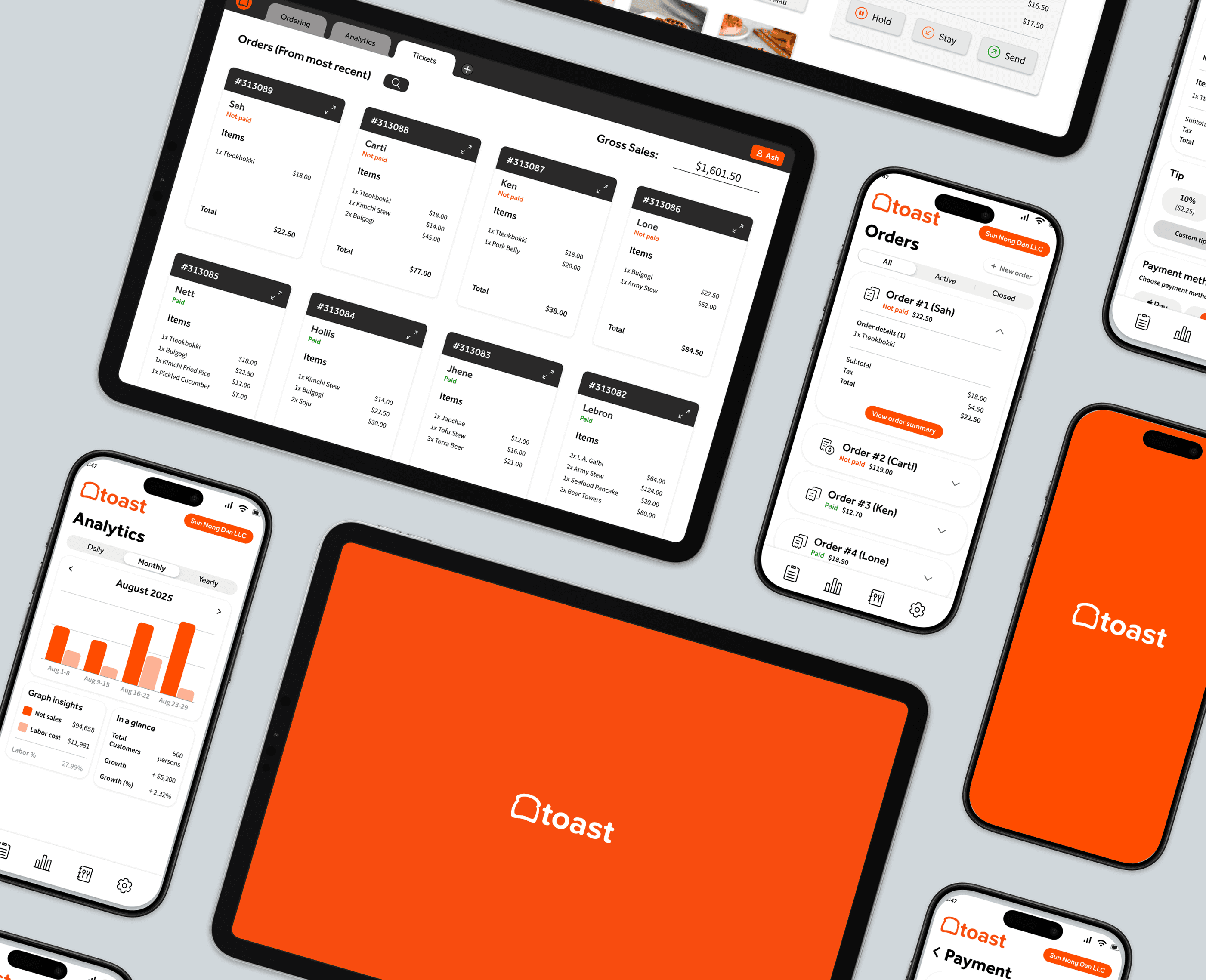
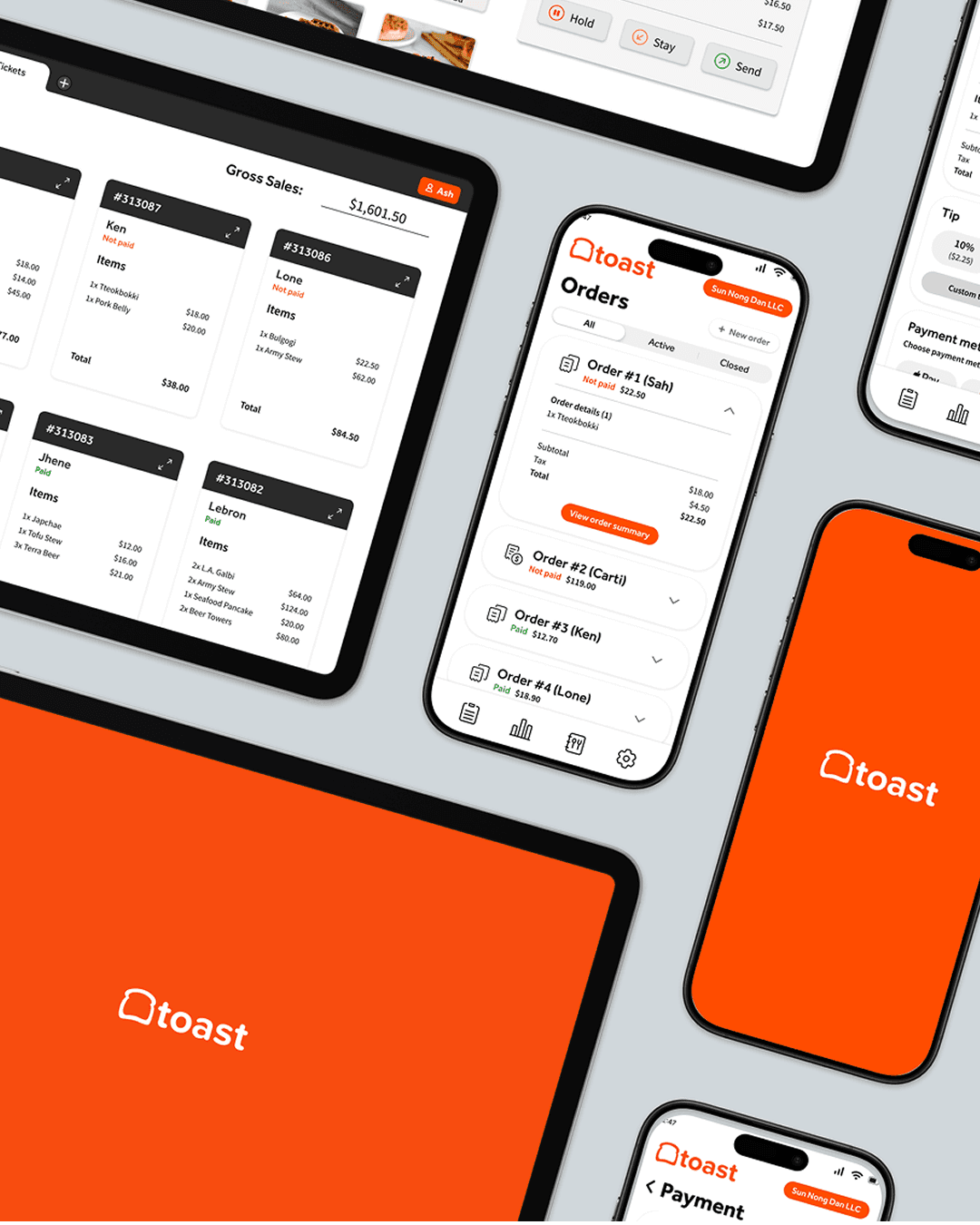
On mobile, designed an order queue with an expandable component to view receipt and allow payments to process through via tap-to-pay / Apple Pay.
On tablet, tab component provides access to Ordering and Tickets (common high-traffic pages) with options to add inventory or analysis pages if cashiers know that they may be needed during service.
On tablet, the ordering page is minimized to allow cashiers to quickly access necessary buttons and actions, while migrating less-traffic items to other tab pages.
ENDING REMARKS
Stakeholder Interviews Provide Real Insight
Working consistently with stakeholders throughout the iteration process provides real reactions and feedback that refines and categorizes features and proposals to be more intuitive.
Less Time on Tech, More Time on What Matters
Stakeholders are satisfied when they can spend less time on assembly-like tasks so that they can get back to doing the service that they love.
Modularity Improves Practicality
Providing users enough guided customization creates inclusive opportunities that encapsulates more prospective user niches.
visual artifacts

Feature Comparison Chart
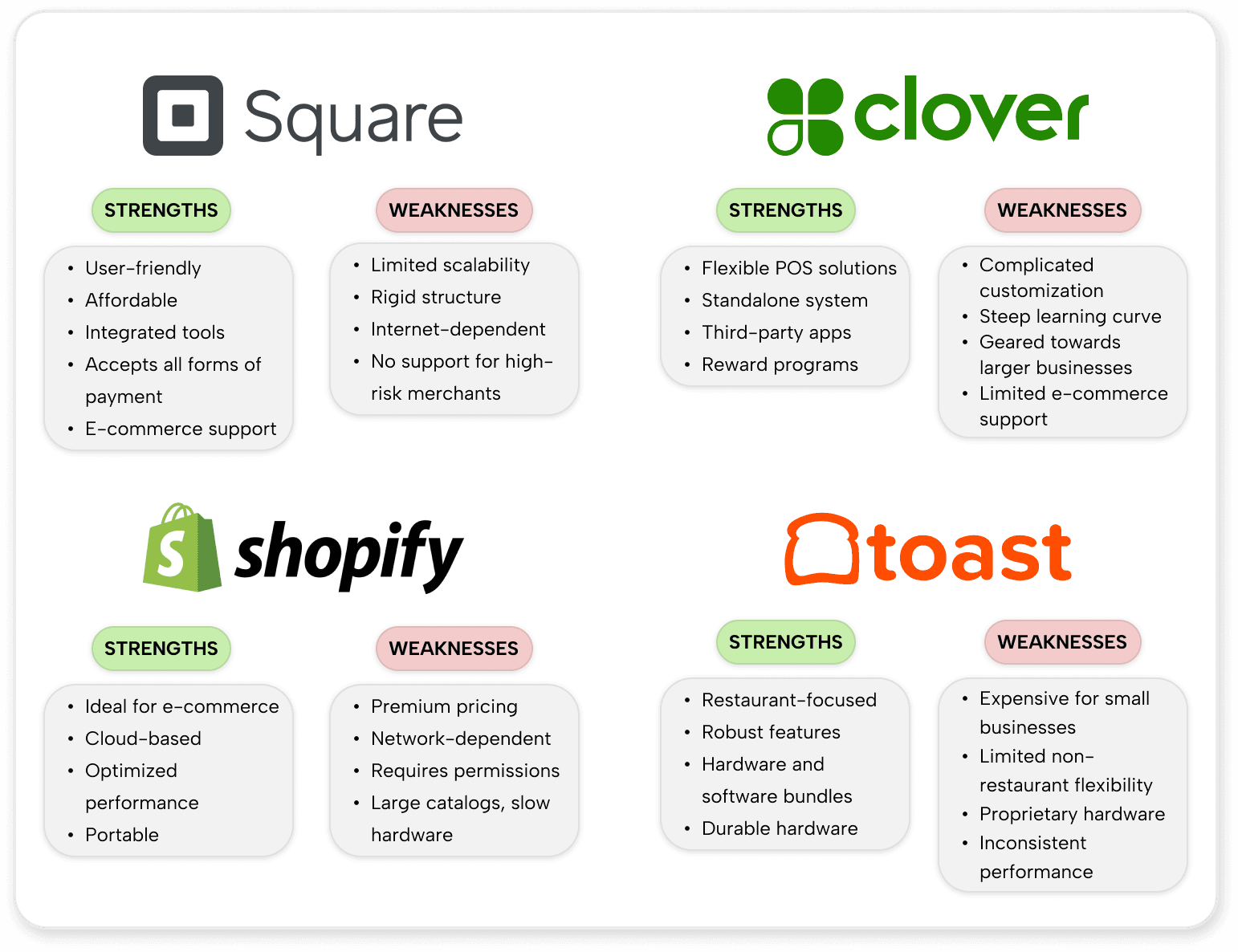
Competitive Analysis

Wireframe Sample

Prior Toast POS UI Reference